
 onE
onEbest viewed with NetSurf

Quake, 1996 - tech demo for 3D graphics Description
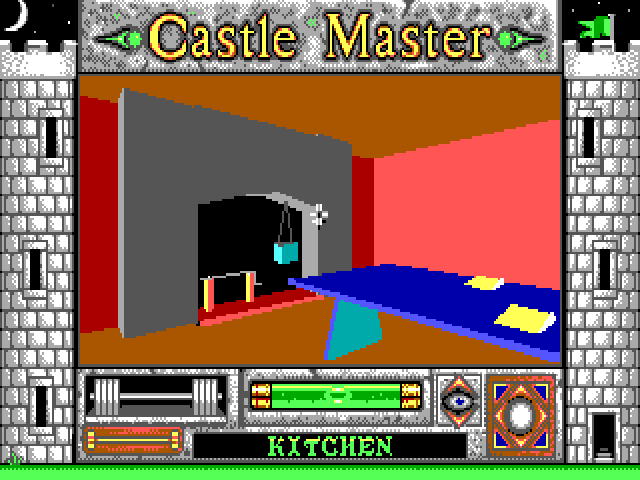
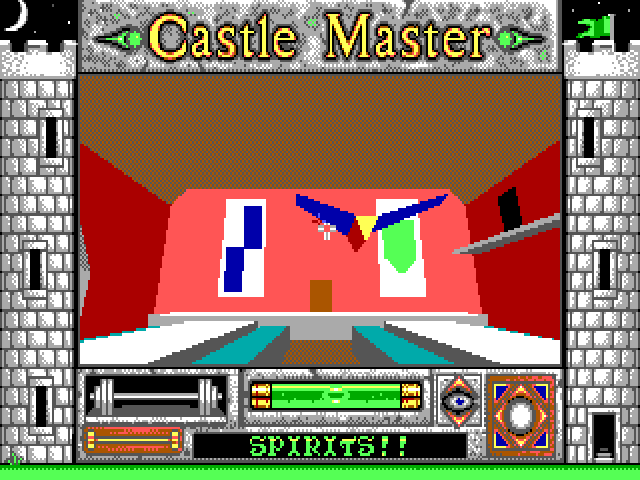
Quake, released in 1996, was a tech demo for 3D computer graphics, inspired from game Castle Master
 ,
released in 1990.
,
released in 1990.
Did you know that Castle Master 1+2 was the first 3D game were you could move freely... and today's games like: Half-Life , Doom,Qauke,Unreal Tournamnet... all orignated from Castle Masters 3D Engine!
 Castle Master,
ZX Spectrum
Castle Master,
ZX Spectrum
|
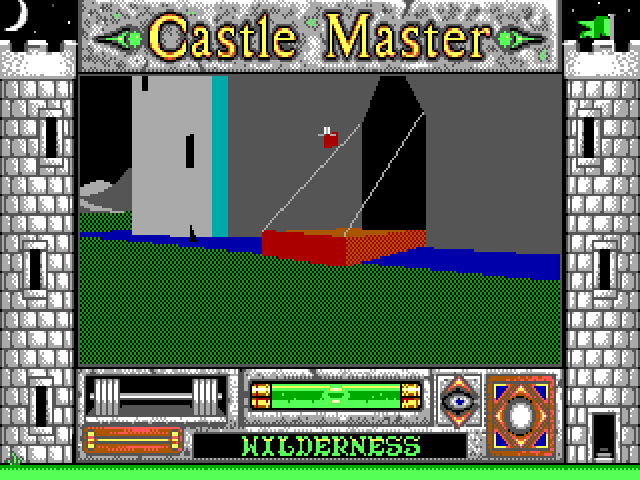 Castle Master, DOS
|
|
|
Although Quake lacks some of the features found in Castle Master, the technique used in it for 3D rendering has a few things worth mentioning, like binary space partitioning, a method developed in the context of 3D computer graphics in 1969, and some optimisations for the Intel Pentium CPUs available in 1996. Quake mainly involves the 3D rendering of a landscape and some movement (a little like walking) through it, but one problem is that these landscapes often contain some ugly animated characters, which look like they want to harm you. It is possible to remove them, but the method, although simple (see Download below), was not documented. The landscapes are stored in files called *.bsp, where the extension .bsp comes from binary space partitioning.
Also worth mentioning is probably the QuakeC language
:
QuakeC is a compiled language developed in 1996 by John Carmack
of id Software to program parts of the video game Quake. Using QuakeC, a programmer
is able to customize Quake to great extents
[...]
QuakeC source code is compiled
using a tool called qcc into a bytecode kept in a file called progs.dat
[...]
Thanks to Carmack's idea of extending video game life by adding unlimited expandability
(extensibility already played a big role in Doom), an enormous Internet community of
gamers and programmers alike has arisen
:
The code is all licensed under the terms of the
GPL (gnu public license).
You should read the entire license, but the gist of it is that you can do
anything you want with the code, including sell your new version. The catch is that if
you distribute new binary versions, you are required to make the entire source
code available for free to everyone.
[...]
All of the Quake data files remain copyrighted and licensed under the original
terms, so you cannot redistribute data from the original game, but if you do a
true total conversion, you can create a standalone game based on this code.
The archive available below (~27 MB) includes:
- Versions 0.61 and 0.71 of TyrQuake, which adds support for new hardware and operating systems;
- Some files from LibreQuake, a true total conversion, which I downloaded and then fixed the maps (*.bsp files) by removing the ugly animated characters from them; first 3 maps are shown in the video below;
- Nwreckdum - there are many landscapes for Quake that can be downloaded from site quaddicted.com, but one problem is that in the archives available there (usually *.zip files), maps are often combined in some larger files called pak*.pak (usually pak0.pak), so you can't access files *.bsp to edit them; program nwreckdum solves this;
- Programs (in C) that I made to edit the maps, especially for removing the monsters from them, details inside.
MD5: 2f996cf5aa650594fee4090c8e5919c2
The following video shows 3 maps (or 4 including start.bsp) from LibreQuake, running with TyrQuake 0.71. Monsters removed, of course.